
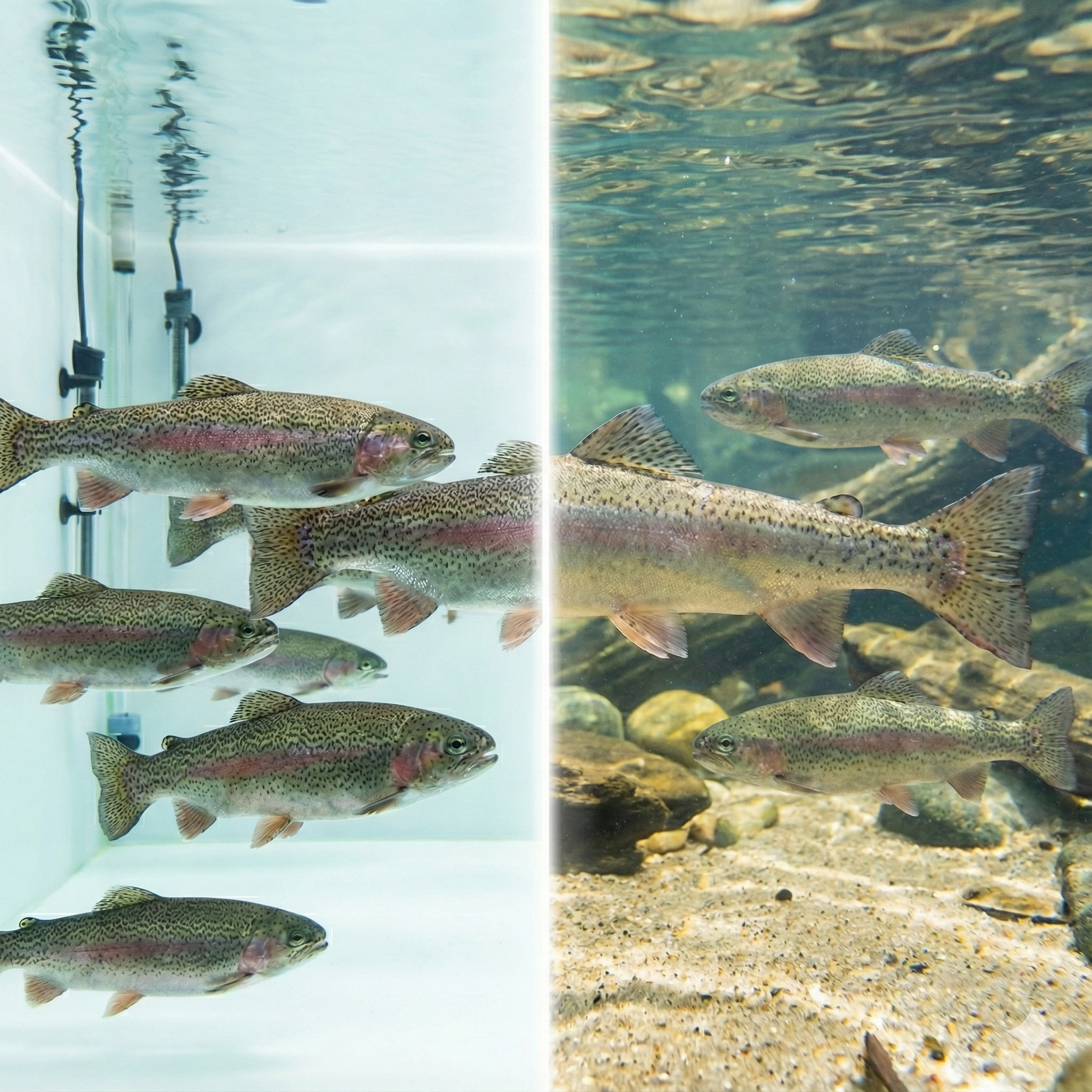
Over the past decade, aesthetic medicine has introduced a steady stream of innovations — but few have generated as much interest as polynucleotide treatments, sometimes nicknamed “fish sperm therapy.” The promise is simple and appealing: high-quality skin repair from within, restored hydration, improved texture, and accelerated natural regeneration.
Yet with popularity comes confusion. Where does the DNA injected into the skin actually come from? Is there really a difference between salmon and trout? And what leads so many physicians to prefer material from one particular fish?
What exactly is “fish sperm therapy”?
Despite the intriguing name, there is no “pure” use of fish sperm in the way the term might suggest. The treatment is based on polynucleotides — DNA chains extracted from cold-water fish that undergo rigorous purification.
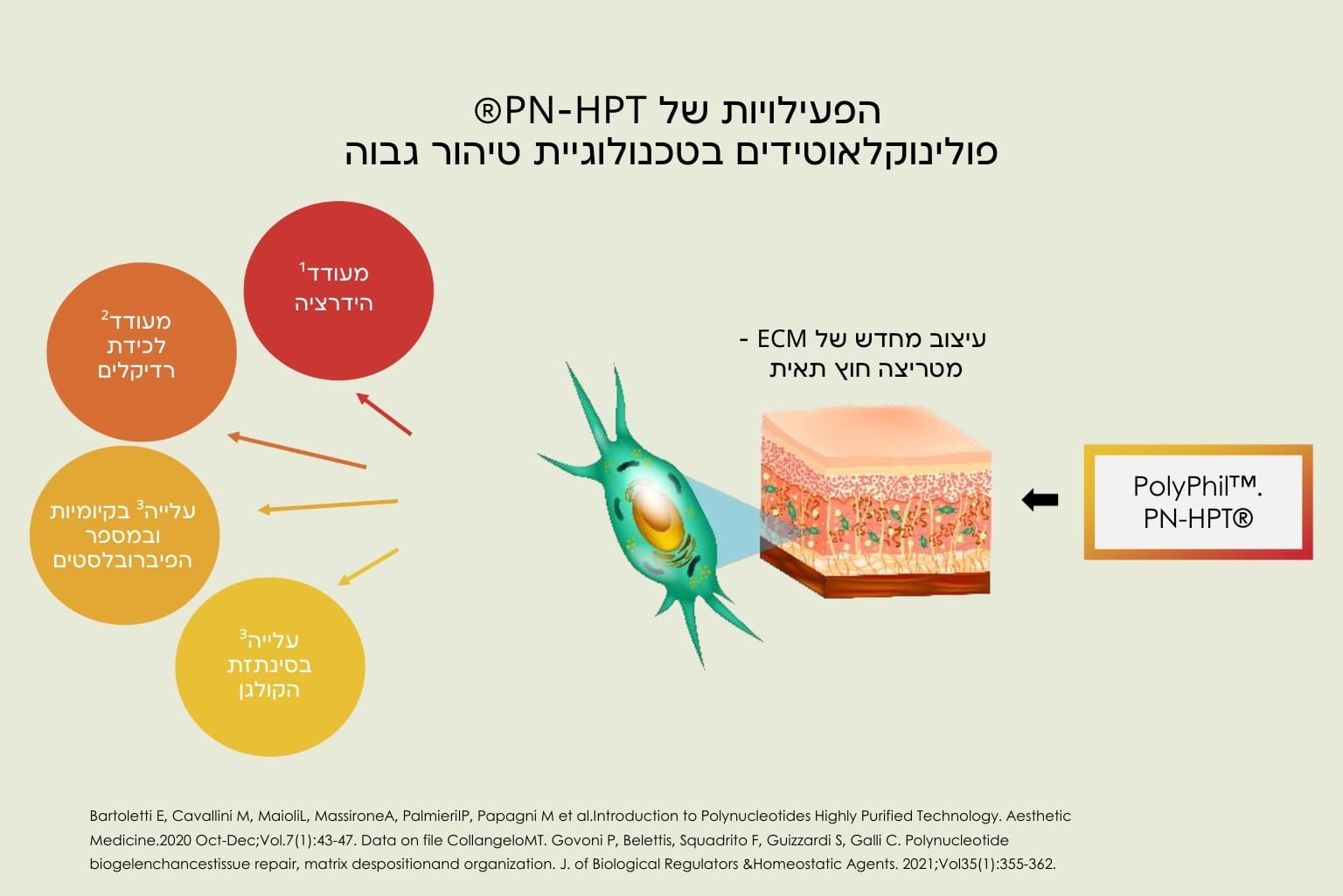
After cleansing and molecular separation, the result is an active material that is injected into the skin and helps repair tissue, boost hydration, improve texture, and activate fibroblasts to produce new collagen.
The biological principle is the same, but the resulting material is not identical across products — and the differences relate mainly to the source of the DNA, the purification process, and the length of the DNA chain.
This is where the major distinction between salmon and trout begins.
Salmon — popular, but not always consistent
The link between salmon and the aesthetics world is nothing new. The fish’s lifestyle, its image as healthy and rich in omega-3, and its roots in Korean beauty culture all helped make “salmon therapy” sound promising and familiar.
In practice, however, when you examine the material at a biological level, several important points emerge. Salmon is a large fish that lives in the wild and is exposed to many environmental variables. As a result, the DNA extracted from it may contain higher levels of proteins and fats that require deeper, more complex purification.
Purification processes affect the consistency of the material, and when the raw material varies, the end result can be less predictable too. Physicians report that differences are sometimes found between batches, particularly in skin response and in the stability of the material.
Trout — positioned as a cleaner, more balanced and more consistent source
Compared with salmon, trout raised in controlled farming conditions offer a significant advantage: stability.
Thanks to uniform growing conditions, clean water, and a controlled diet, the DNA extracted from trout is generally considered to arrive at a higher level of purity from the outset, with fewer biological contaminants.
This means a simpler, more efficient purification process that yields a cleaner, more consistent, and more predictable material.
In addition, precise extraction processes make it possible to preserve the length of the DNA chain — a critical factor that influences the material’s ability to remain stable within the tissue, act over time, and support repair processes.
Physicians who work with trout-based materials report fewer surprises, fewer skin reactions, and a result that holds more consistently from one patient to the next.
DNA chain length: the small detail that makes a big difference
One of the most significant discoveries in the field of polynucleotides is the importance of DNA chain length. Longer chains have a stronger, more stable effect, bind better to water, and remain active within the skin over time.
When the extracted material comes from trout — a fish that tends to supply more uniform, stable DNA — it is possible to preserve chain length and deliver a high-grade active material.
This is why new-generation materials, built on advanced purification technologies, are sometimes described as “the next generation of repair treatments.” They rely not on the reputation of the fish, but on genuine molecular stability.
Why physicians are switching to trout sources
Clinics across Israel and around the world report a shift in professional preference. While the name “salmon” still attracts patients thanks to its marketing familiarity, physicians prefer to work with a material that gives them three key things: safety, stability, and consistent results.
Trout, thanks to controlled growing conditions and precise purification, meets all three of these needs.
Beyond that, materials based on trout DNA are better suited to combinations with other treatments — laser, RF, microneedling, and hyaluronic acids — making it possible to build more complex and safer protocols.
PolyPhil™: the advanced generation built on trout purity — and already available in Israel
PolyPhil™ is based on polynucleotides extracted from trout raised on controlled farms. Its purification process, built on PN-HPT™ technology, makes it possible to remove contaminants almost entirely and to preserve the full length of the DNA chain. The result is a cleaner, more consistent, and more precise material with a high capacity to act within the tissue.
In practice, this means a gentler, safer treatment for patients — suitable even for sensitive areas such as the eyes and neck — that delivers consistent results over time. Physicians who bring PolyPhil™ into their practice report an excellent fit for combination treatments and particularly stable results — two factors that reinforce its place as part of the new generation of repair treatments. Polynucleotide treatments are no longer a Korean “trick”; they are a meaningful part of aesthetic medicine.
While salmon is better known to the general public, professional progress is heading toward trout — thanks to molecular stability, high purity, and consistency that holds from one treatment to the next.
For more information and to find clinics offering PolyPhil treatments, click here
PolyPhil compared with other products on the market
Several polynucleotide-based products are available on the Israeli market, but PolyPhil by Croma Pharma stands out in several respects. First, its raw material is extracted from water sources in a controlled environment — unlike products based on DNA from wild salmon, which may contain environmental contaminants. Second, the PolyPhil manufacturing process includes advanced Ultra-Pure purification, which significantly reduces the risk of allergic reactions.
In addition, PolyPhil is manufactured in a CE-certified European facility and meets the stringent regulatory requirements of the European Union. The product is registered with the Israeli Ministry of Health (AMAR) and is distributed exclusively in Israel by Lee Daniels Holdings.
Recommended treatment protocol
PolyPhil treatment typically involves a series of 3–4 sessions spaced 2–4 weeks apart, depending on the condition of the skin and the treatment area. Each session lasts about 20–30 minutes and includes local injection into the face, neck, or décolleté. Results improve gradually over time, with a noticeable improvement already after the first session and optimal results appearing about 4–6 weeks after completing the series.
It is worth noting: PolyPhil is not a volumizing filler — it is a biostimulator that encourages the body to produce collagen naturally. As a result, the outcome is more natural and longer-lasting, holding for up to 6–12 months after the series is completed.
For more information on PolyPhil treatments and to arrange a professional consultation, visit the product page or get in touch with the Lee Daniels team.
Lee Daniels Team
Lee Daniels Holdings | An Israeli distributor and marketer of advanced medical aesthetics equipment, fillers, and laser systems. Authorized distributor of Croma Pharma, Quanta System, LEMI, Needle Concept, and more. AMAR registration | ISO 9001:2015 | CE