Beauty needs no
filters
Polynucleotide injections
for skin renewal and repair
A skin injectable that activates
your DNA for regeneration
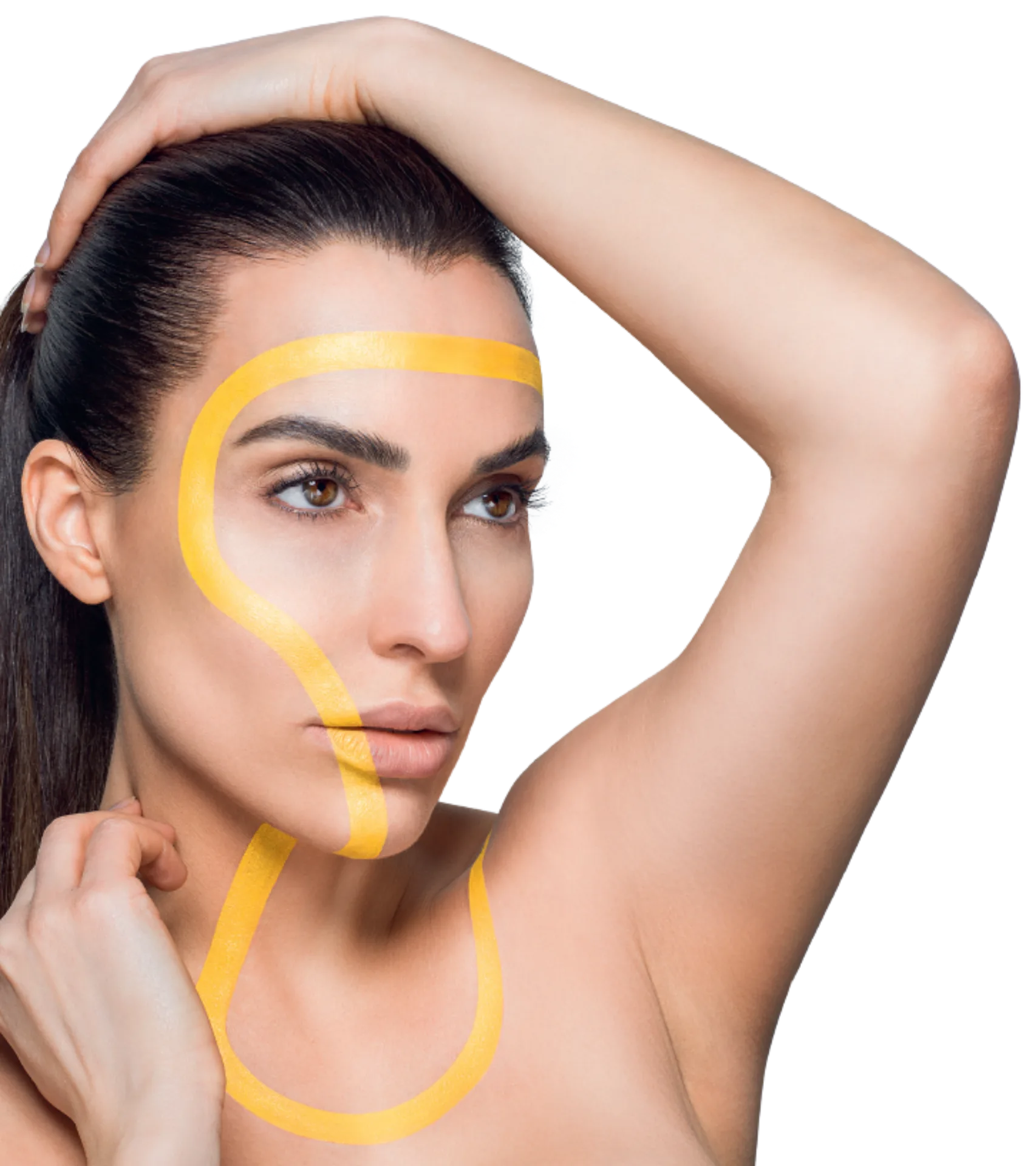
- Firming the neck and décolleté
- Reducing dark circles around the eyes
- Improving the appearance of the back of the hands and smoother texture
- Smoothing and softening scars
- Improving hair density and strength
Next-generation injectables: polynucleotides
Meet the PolyPhil™ injectable range – a genuine innovation in aesthetic medicine. Based on naturally sourced polynucleotides (trout-derived), PolyPhil™ uses bioactive DNA fragments that activate the skin from within: stimulating collagen synthesis, accelerating tissue regeneration and restoring the radiance, vitality and elasticity lost over the years.
Designed for physicians seeking an advanced, safe and versatile solution – for treating the most delicate and challenging areas such as under the eyes, neck, hands and, of course, the face – with results backed by science and clinical research.
PolyPhil™ doesn’t just address symptoms – it prompts the skin to regenerate.
Leave your details to receive tailored information
Groundbreaking innovation – the injectable range
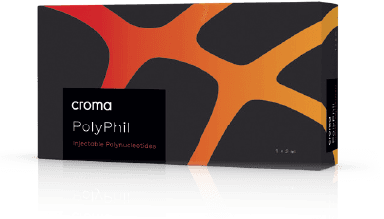
™PolyPhil
PN-HPT™ 40 mg/2 ml
Indications: young/delicate skin – neck, face, décolleté, hands, scars, acne scars.
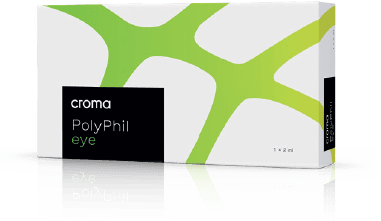
PolyPhil™ eye
PN-HPT™ 15 mg/2 ml
Indications: eye area, eyelids.
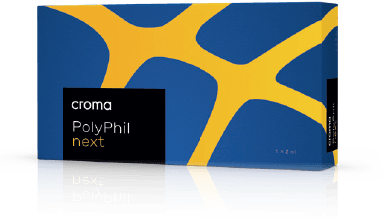
PolyPhil™ next
PN-HPT™ 20 mg/2 ml +
Hyaluronic acid 20 mg/2 ml
Indications: mature and dry skin – face, neck, décolleté, hands, scars, acne scars.
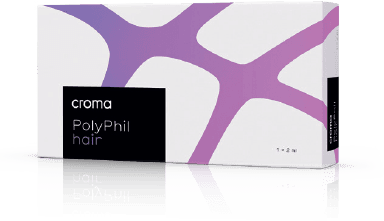
PolyPhil™ hair
PN-HPT™ 15 mg/2 ml
Indications: hair, eyebrows.
PolyPhil™ gels have high biocompatibility with a very low risk of side effects.³
91% clinical improvement in reducing fine superficial wrinkles and in skin quality.⁵
PolyPhil™ helps improve skin structure and overall elasticity; by reactivating the “foundations” of the dermal tissue, PolyPhil can enhance the results of other skin-rejuvenation techniques.³
PN-HPT™ is derived from aquatic sources in a fully controlled environment that ensures safety and quality through a proprietary high purification technology at a European manufacturing facility. Over 70 years of research and more than 100 studies published and presented at national and international congresses support the safety and efficacy of polynucleotides.
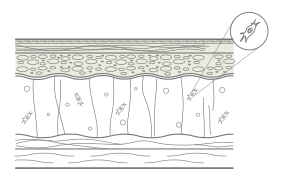
- Promotes¹ hydration
- Promotes² free-radical scavenging
- Increase³ in fibroblast viability and number
- Increase³ in collagen synthesis
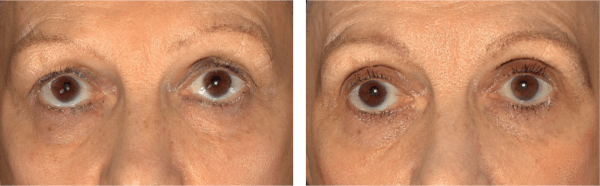
Age 74: age-related changes in the mid-face and tear-trough area | Treatment with PolyPhil Eye and PolyPhil | Frequency: 5 sessions every 2–3 weeks | Area: mid-face and under-eye region | Product volume: 10.0 ml of PolyPhil Eye and 10.0 ml of PolyPhil | Injection technique: microdroplet | Injection depth (layer): intradermal | Volume per injection: 2.0 ml of each – PolyPhil and PolyPhil Eye per session | Result after 3 months
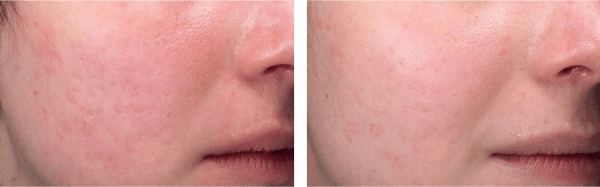
Age 26: acne scars | Treatment with PolyPhil | Frequency: 3 sessions every 2–3 weeks | Target area: cheeks and chin | Product volume per side: 1.0 ml | Injection technique: microdroplet/fanning | Injection depth (layer): intradermal | Volume per injection: 0.3–1.0 ml | Result after 8 weeks
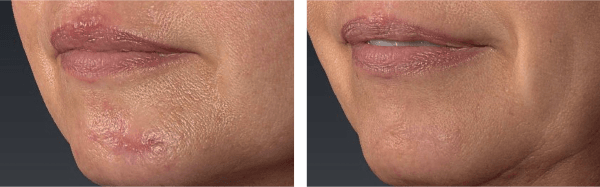
Age 51: scar | Treatment with PolyPhil, PolyPhil Eye | Frequency: 3 sessions every 4 weeks | Target treatment area: chin and upper lip (scars), full face, periorbital | Product volume/side: 1.0 ml | Injection technique: microdroplet/fanning | Injection depth (layer): intradermal | Volume per injection: 0.3–1.0 ml
Prof. Ofir Artzi: the polynucleotide revolution in skin treatments
Polynucleotides: an anti-aging solution for inflamed and sensitive skin
Three key uses of polynucleotides
How do polynucleotides and energy-based devices work together?
Polynucleotide treatment – when will we see results?
Leave your details to receive tailored information
Lee Daniels is proud to bring PolyPhil™ by Croma to Israel – advanced technology for skin rejuvenation!
For more information and orders, contact us today! +972-3-6991900
The content on this page does not constitute medical advice and is not a substitute for consultation with a specialist.
The information and testimonials presented here should not be regarded as a promise of any particular result, which may vary from person to person.
References
1 Goldie K, Kerscher M, Fabi SG, Hirano C, Landau M, Lim TS, Woolery-Lloyd H, Mariwalla K, Park JY, Yutskovskaya Y. Skin Quality
– A Holistic 360° View: Consensus Results. Clin Cosmet Investig Dermatol. 2021 Jun 14;14:643-654. doi: 10.2147/CCID.S309374.
PMID: 34163203; PMCID: PMC8214518.
2 Cevik Cenkeri H, Sarigul Guduk S, Derin Cicek E. Aging Changes of the Superficial Fat Compartments of the Midface Over Time:
A Magnetic Resonance Imaging Study. Dermatol Surg. 2020
3 Cavallini et al. Consensus report on the use of PN-HPT™ (polynucleotides highly purified technology) in aesthetic medicine J
Cosmet Dermatol. 2020;00:1–7.
4 PolyPhil Instruction for use
5 Cavallini and Papagni, Long chain polynucleotides gel and skin biorevitalization; Journal of Plastic Dermatology 2007; 3,
6 Data on file
7Collangelo MT et al. Polynucleotide biogel enchances tissue repair, matrix desposition and organization. J. of Biological Regulators
&Homeostatic Agents. 2021;Vol35(1):355-362
What are polynucleotides?
Polynucleotides (PN for short) are naturally sourced bioactive DNA fragments — in the case of PolyPhil™, derived from trout using High Purification Technology (PN-HPT™). Unlike hyaluronic-acid-based fillers, whose purpose is to add volume, a polynucleotide injection works as a biostimulator: it stimulates the skin’s fibroblast cells to produce collagen and elastin naturally, improves hydration and scavenges free radicals. The result is an improvement in the skin’s quality, texture and strength — from the inside out.
The treatment is designed for physicians seeking an advanced, safe solution for the most delicate areas: under the eyes, neck, décolleté, the back of the hands, as well as for softening scars and boosting hair density. PN-HPT™ polynucleotides have high biocompatibility and a very low risk of side effects.
Polynucleotides vs. hyaluronic acid — what’s the difference?
The key difference lies in the mechanism of action. Hyaluronic acid (HA) physically adds volume and provides an immediate, temporary result. Polynucleotides do not add volume — they activate a cellular regeneration process that improves skin quality over time. The two are not competitors but complementary: PolyPhil™ next combines both technologies in a single syringe. Polynucleotides can be combined alongside filler treatments, energy-based devices and other procedures to enhance the overall result.
Frequently asked questions about polynucleotide injections
How many polynucleotide treatments are needed and when do results appear?
A typical protocol involves 3 to 5 sessions at intervals of 2–3 weeks. An initial improvement in hydration and skin radiance is visible after the first sessions, while the full structural improvement — in density and elasticity — develops over several weeks as collagen production increases.
Are polynucleotide injections safe?
PN-HPT™ polynucleotides have high biocompatibility and a very low risk of side effects. The material is produced in a controlled environment at a European manufacturing facility, and its safety is supported by clinical research.
Which areas are suitable for polynucleotide injections?
The treatment is especially suited to delicate and challenging areas: under the eyes and eyelids (PolyPhil™ eye), neck, décolleté, face, the back of the hands, softening scars and acne scars, as well as boosting hair and eyebrow density (PolyPhil™ hair).
What is the difference between PolyPhil and other polynucleotides on the market?
PolyPhil™ is manufactured with PN-HPT™ technology and is officially distributed in Israel by Lee Daniels, on behalf of Croma Pharma. Lee Daniels provides physicians with clinical guidance, hands-on training and full professional support.